
US Supply Chains in 2026: Managing Trade Shifts, Port Risk, and Ocean Freight Volatility
In 2026, US supply chains are operating inside a structurally volatile trade environment. Resilience is engineered into every program from the outset.
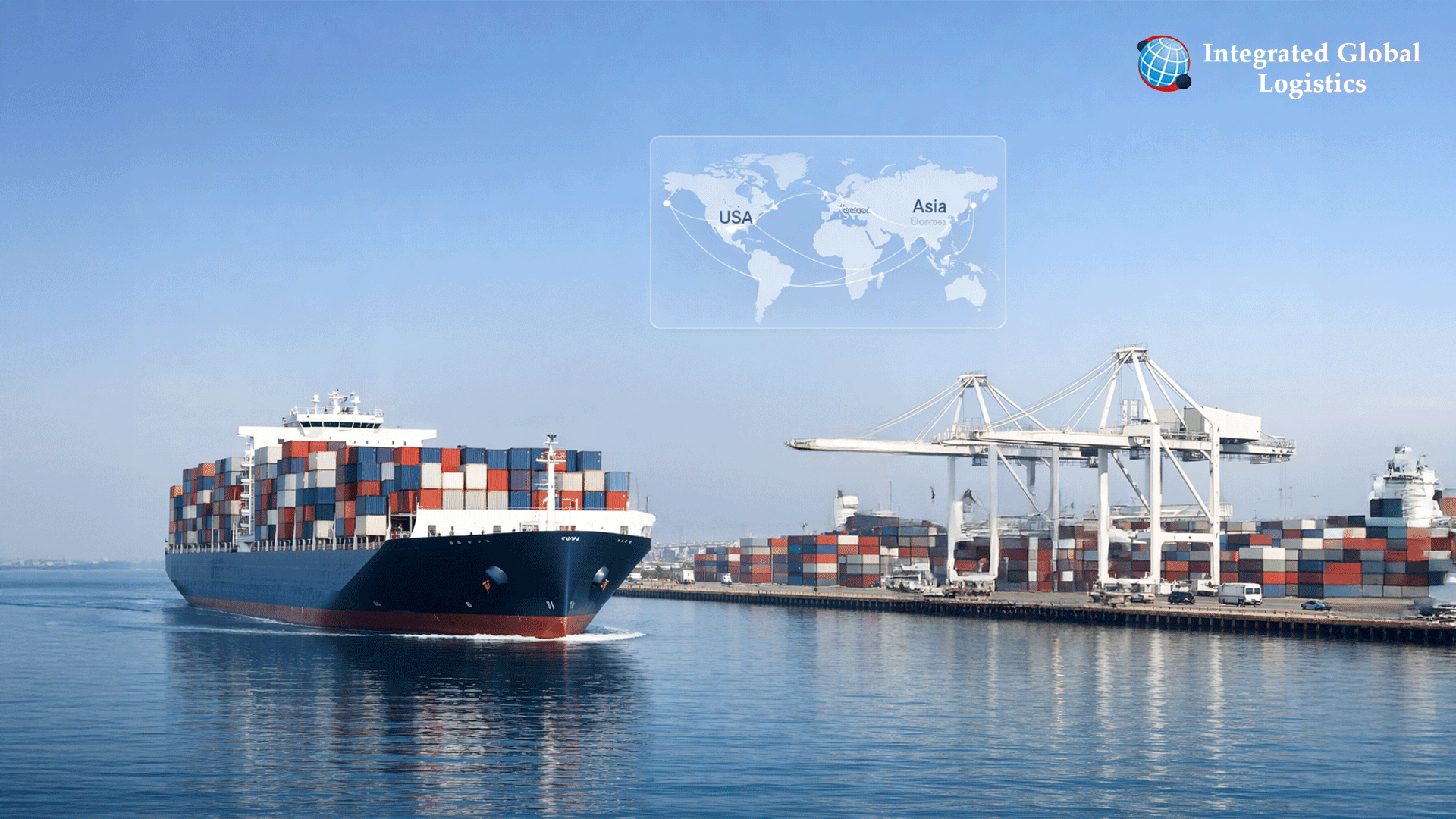
In 2026, US supply chains are not facing temporary disruption. They are operating inside a structurally volatile trade environment.
For US based importers and exporters, ocean freight volatility, extended transit times, shifting trade lanes, and port variability are no longer exceptions. They are operating conditions.
Across the United States, logistics leaders are redesigning supply chain management strategy around one principle: controlled execution.
At Integrated Global Logistics, resilience is not treated as a reaction to disruption. It is engineered into every ocean freight, reefer logistics, and inland trucking program from the outset.
Trade Shifts Are Restructuring US Import Logistics
US import logistics strategy in 2026 reflects accelerated supplier diversification. Sourcing expansion across South Asia and Southeast Asia has altered traditional Asia to US routing structures.
For US importers, this creates measurable operational impacts:
- Additional carrier rotations with different port calls
- Longer average transit durations into US East Coast gateways
- Equipment repositioning delays
- Evolving customs documentation requirements
- Increased dependency on discharge coordination
For example, when multiple Asia services discharge within a 48 hour window at the Port of Savannah or the Port of New York and New Jersey, drayage appointment slots tighten immediately. Without pre aligned inland capacity, dwell exposure expands beyond free time and costs escalate.
IGL approaches US supply chain management through structured lane architecture. Trade lanes are not booked transactionally. They are mapped. Carrier selection, port pair alignment, inland dispatch buffering, and documentation control operate under one coordinated execution framework.
When trade lanes shift, control must scale with them.
US Port Risk Management in 2026
US port congestion risk management now includes more than seasonal surges. It includes blank sailings, rerouted vessels, schedule compression, and arrival clustering.
Major US gateways such as:
- • Port of Los Angeles
- • Port of Long Beach
- • Port of New York and New Jersey
- • Port of Savannah
continue processing high throughput volumes while carriers adjust global service strings.
Operational consequences for US importers include:
- Discharge surges that compress truck appointment windows
- Terminal storage exposure beyond free days
- Equipment imbalance at inland ramps
- Inventory forecasting distortion
IGL mitigates these risks through proactive monitoring and inland synchronization. Vessel ETA tracking is tied to predefined dispatch thresholds. Drayage capacity is aligned against expected discharge windows before vessel arrival.
Ocean freight execution without inland integration creates margin leakage. Integrated orchestration protects it.
Ocean Freight Volatility in the US Market
US ocean freight volatility in 2026 is driven by capacity redeployment, geopolitical routing adjustments, and fuel cost variability.
Unstructured exposure leads to unstable freight budgets.
IGL structures US ocean freight programs around allocation discipline:
Contract Allocation Stability
Core volumes are secured with aligned carrier partners to stabilize base capacity across priority lanes.
Controlled Spot Exposure
Spot market participation is deployed intentionally for surge flexibility, not as a reactive necessity.
Port Pair Diversification
Redundant port combinations reduce concentration risk within single gateway clusters.
Inland Capacity Buffering
Ocean bookings are synchronized with domestic trucking capacity across the US domestic trucking network prior to vessel discharge.
Volatility cannot be eliminated. It can be engineered into structured tolerance bands.
Reefer Logistics in Extended Transit Environments
For US importers and exporters handling temperature sensitive cargo, ocean freight volatility magnifies risk.
Extended sailing patterns into US East Coast ports increase exposure to:
- Temperature deviation risk
- Power supply inconsistencies at terminal
- Inspection delays
- Inland transfer lag
IGL's cold chain control model includes:
- Pre shipment reefer equipment verification
- Set point validation at origin
- Continuous monitoring protocols
- Priority discharge coordination at US gateways
- Immediate inland dispatch alignment to temperature controlled facilities
Reefer cargo is not treated as a standard container movement. It operates within a controlled compliance chain from origin to final warehouse.
In temperature controlled supply chains, process depth protects integrity.
Inland Trucking Integration Across the United States
US supply chain stability in 2026 is increasingly determined by domestic trucking execution.
When multiple services discharge within narrow windows at Los Angeles or Savannah, drayage appointment capacity becomes constrained. Without structured pre allocation, containers accumulate terminal dwell.
IGL integrates:
- Port to warehouse drayage planning
- Appointment booking coordination
- Real time truck dispatch visibility
- Cross dock and warehousing synchronization
- Escalation protocols across time zones
Ocean freight and trucking are not separate functions. They are a unified performance chain.
Within US supply chain management, inland execution is now a strategic lever, not a secondary task.
US Export Logistics Control
For US manufacturers and exporters, global demand in 2026 is opportunity driven but operationally sensitive.
Export logistics programs require:
- Container availability forecasting at origin
- Cutoff compliance discipline
- Documentation precision
- Terminal coordination
- Inland alignment from facility to port
At Integrated Global Logistics, export programs are centralized under a defined control structure. Container sourcing, booking confirmation, compliance validation, and inland dispatch operate within one execution architecture.
Predictability at US origin protects global delivery commitments.
How Integrated Global Logistics Engineers Supply Chain Stability
IGL's methodology for US supply chain management in 2026 is structured, not reactive.
Each program is designed through:
- Lane risk assessment prior to allocation
- Carrier rotation mapping and schedule analysis
- Port pair redundancy planning
- Inland capacity buffering aligned to discharge forecasts
- Cold chain verification checkpoints
- Defined escalation matrix across operations teams
This architecture reduces fragmentation.
Supply chains do not fail because of one event. They fail because control mechanisms are disconnected.
IGL eliminates disconnection by aligning ocean freight, reefer logistics, and inland trucking under a single operational command structure with full visibility.
The 2026 Imperative for US Shippers
The US logistics market will not return to static stability.
US importers and exporters must build programs designed for:
- Adaptive routing
- Structured carrier allocation
- Port risk management
- Temperature precision
- Inland synchronization
- Visibility driven decision making
Resilience in 2026 is not achieved through scale alone. It is engineered through execution architecture.
Integrated Global Logistics designs that architecture deliberately, lane by lane, port by port, shipment by shipment.
Frequently Asked Questions
What is driving US supply chain volatility in 2026?
US supply chain volatility is driven by trade lane diversification, vessel rerouting, capacity redeployment, schedule compression at US ports, and inland trucking bottlenecks.
How can US importers reduce exposure to ocean freight rate fluctuations?
By structuring carrier allocations, balancing contract and spot strategies, diversifying US port pairs, and synchronizing inland trucking before vessel discharge.
Why is US port risk management critical in 2026?
Arrival clustering at major US gateways such as Los Angeles, Long Beach, Savannah, and New York and New Jersey can compress appointment windows and increase dwell costs if inland dispatch is not pre aligned.
How does IGL manage reefer logistics risk?
Through pre shipment equipment validation, monitoring protocols, priority discharge coordination, and immediate inland temperature controlled transfer planning.
What differentiates Integrated Global Logistics from transactional freight brokers?
IGL engineers structured supply chain programs that integrate ocean freight, reefer logistics, and inland trucking under one coordinated execution architecture with defined control protocols and visibility layers.
Ready to structure your US supply chain for 2026?
Contact Integrated Global Logistics to discuss lane architecture, port risk mitigation, and integrated ocean and inland execution.
Get in touch at integratedgl.com →