
Why Temperature Control Alone Isn't Enough: The Complete Cold Chain Solution
In 2026, cold chain logistics faces a defining moment. Documentation, compliance, and execution expertise define success.
Introduction
In February 2026, cold chain logistics faces a defining moment. Pharmaceutical companies shipping life saving vaccines, food exporters moving perishables to international markets, and meat producers serving global demand all share a common challenge: temperature control alone no longer guarantees product integrity.
Stricter regulations demand full documentation trails. Retailers require auditable custody chains. Climate volatility creates unprecedented risks for temperature sensitive cargo. A single degree deviation can spoil a $500,000 pharmaceutical shipment or trigger costly rejections at destination ports.
Yet many shippers still rely on basic reefer services that monitor temperature but lack the compliance infrastructure, documentation rigor, and specialized expertise that modern cold chains demand. The cold chain is no longer just about keeping cargo cold. It is about proving it stayed cold, documenting every touchpoint, and maintaining complete custody visibility from origin to delivery.
The 2026 Cold Chain Reality: New Standards, Higher Stakes
The cold chain logistics landscape has fundamentally shifted. Global demand for temperature sensitive products continues accelerating, driven by pharmaceutical innovation, fresh food consumption preferences, and international trade in perishable goods.
Regulatory requirements have intensified accordingly. The FDA, USDA, and international health authorities now mandate documented custody chains and proper handling protocols. Retailers and distributors increasingly require auditable proof that cold chain integrity was maintained. Not shipper assertions, but verifiable documentation covering every mile and every handoff.
Climate change compounds these challenges. Rising temperatures stress energy grids, increasing the risk of power disruptions at warehouses and terminals. Extreme weather events create route delays that extend cargo time in transit, multiplying exposure to temperature fluctuations. Heat waves accelerate spoilage of fresh produce even with refrigeration, while pharmaceutical products can become ineffective after minor temperature deviations.
Tariff uncertainty adds further volatility. Shippers rush cargo ahead of policy changes, then face abrupt volume contractions. These oscillations strain cold chain infrastructure and expose weak operational planning. In this environment, operational excellence, compliance rigor, and specialization are the dividing line between controlled delivery and costly failure.
What Makes IGL Different: Cold Chain Specialization
Integrated Global Logistics is not a general freight forwarder that happens to offer reefer services. IGL is a cold chain specialist built around temperature controlled logistics.
Operating as a licensed NVOCC and full service freight forwarder, IGL focuses on what matters most for sensitive cargo: operational precision, compliance driven processes, and reliable execution across every mode.
IGL industry certifications reflect this specialization. IGL is certified by the U.S. Meat Export Federation for managing specialized meat exports and approved by the USA Poultry and Egg Export Council for managing specialized food exports. These credentials reflect rigorous handling protocols, documentation discipline, and quality standards demanded by the most regulated supply chains in the world.
Comprehensive Cold Chain Services
IGL delivers full service cold chain logistics across every critical dimension:
Temperature Controlled Ocean Freight
FCL reefer container shipping with direct carrier access on global routes. Compliance driven routing ensures proper handling at every port and preserves cargo integrity throughout transit.
Pharmaceutical Cold Chain
Specialized logistics for vaccines, biologics, blood products, and temperature sensitive medications requiring strict temperature ranges and complete regulatory documentation. Pharmaceutical cold chain failures do not only cost money. They affect patient health.
Food Grade Logistics
Dedicated cold chain services for meat exports, poultry, fresh produce, seafood, and frozen goods. USDA certifications ensure handling meets regulatory and buyer standards.
48 State Reefer Trucking
Nationwide FTL and LTL coverage using reefer equipped fleets that maintain temperature control across all major U.S. markets.
Customs Clearance Excellence
End-to-end compliance coordination for ISF, AMS, FDA documentation, and port clearances via our vetted logistics partners, ensuring faster clearances and minimizing risk to temperature-sensitive cargo.
The IGL Difference: Documentation and Compliance Expertise
Cold chain success depends on proof, not promises. IGL delivers auditable compliance through structured documentation and disciplined handling procedures.
Complete Documentation Trails
Digital custody chains record every handoff from origin pickup through final delivery. Retailers and regulators receive verifiable proof on demand.
Comprehensive Reporting
Detailed insights into transit times, carrier performance, and routing efficiency support informed planning and risk reduction.
Dedicated Customer Support
Professional account management coordinates communication across suppliers, customs brokers, warehouses, and consignees.
Multi Modal Integration That Preserves Cold Chain Integrity
Cold chain shipments frequently move across multiple modes. Each transfer introduces risk when coordination fails. IGL integrated execution eliminates these gaps:
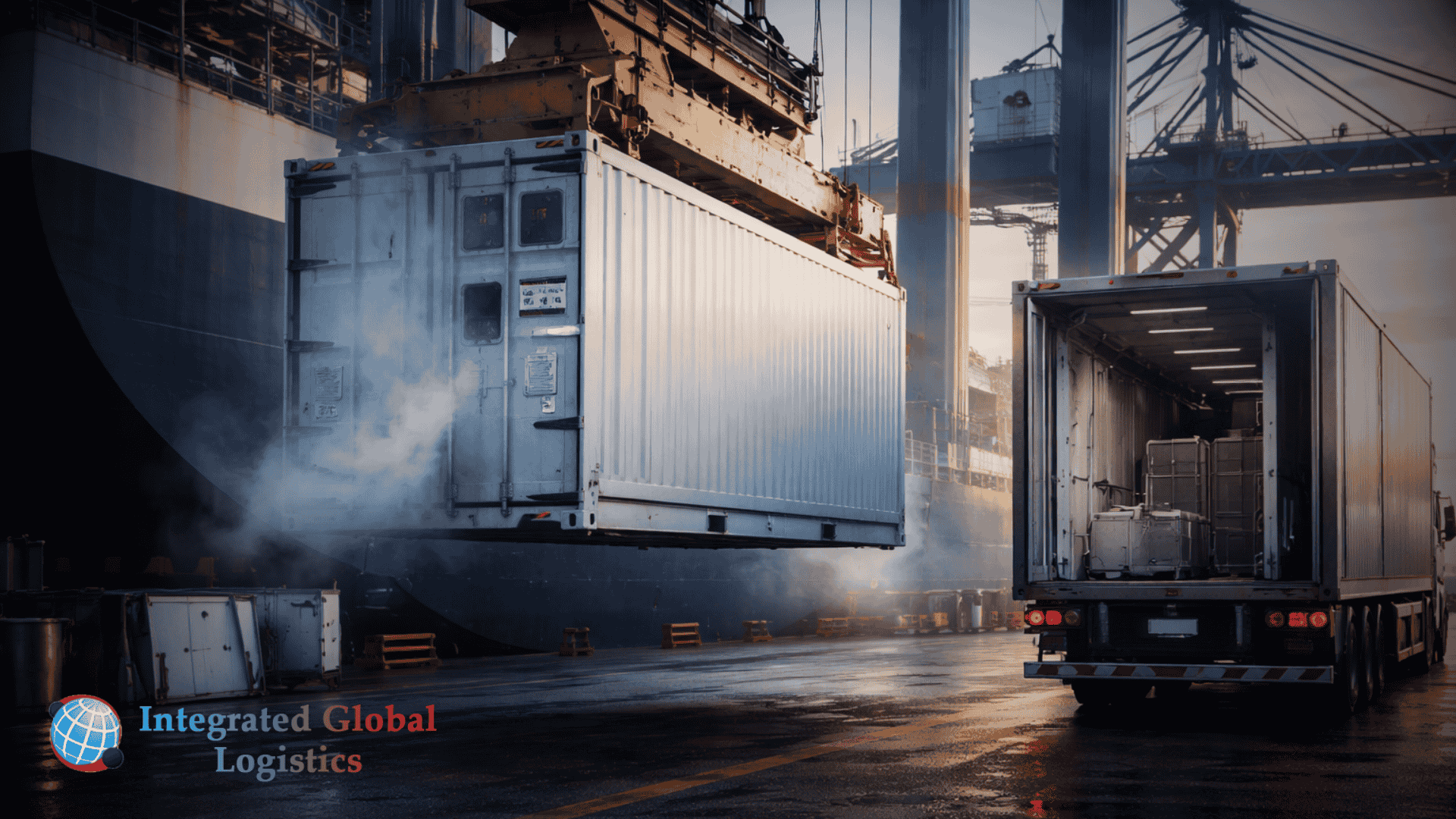
- Ocean to truck coordination that moves reefer containers directly from vessel to temperature controlled chassis
- Strategic port proximity that minimizes dwell time between controlled environments
- Pre cleared documentation that accelerates customs release
- Backup routing protocols that protect cargo during weather disruptions, congestion, or equipment failure
The result is uninterrupted temperature compliance from overseas origin to final delivery.
Why Expertise Matters in Cold Chain Logistics
Temperature controlled freight requires specialized knowledge that generic forwarders do not possess.
Product requirements vary. Vaccines may require ultra cold storage at -70°C. Fresh produce demands narrow temperature bands between 0°C and 4°C. Meat exports require USDA specific documentation and handling discipline.
Carrier quality varies widely. IGL works only with reefer carriers that meet strict maintenance and performance standards.
Contingencies must be planned in advance. Equipment failures and port delays require immediate execution, not reactive scrambling.
Regulatory frameworks differ across FDA, USDA, and international authorities. Cold chain specialists maintain active compliance expertise across all regimes.
Risk management requires proper insurance alignment, deviation protocols, and claims documentation.
IGL Commitment: Precision, Reliability, Innovation
IGL operates with a singular focus on execution quality:
- Zero compromise cold chain standards
- Proactive communication
- Transparent pricing
- Continuous process improvement
- Partnership driven decision making
IGL serves commercial shippers with recurring, complex freight requirements. Pharmaceutical manufacturers, meat exporters, and food importers rely on IGL for operational precision and regulatory confidence.
Frequently Asked Questions
What industries does IGL specialize in for cold chain logistics?
IGL specializes in pharmaceutical cold chain logistics, food grade exports including meat and poultry, and temperature sensitive perishables requiring strict compliance.
Is IGL certified for food and pharmaceutical shipments?
Yes. IGL is certified by the U.S. Meat Export Federation and approved by the USA Poultry and Egg Export Council, with extensive FDA documentation expertise.
Can IGL manage ocean freight and domestic trucking?
Yes. IGL provides integrated cold chain logistics across ocean freight and 48 state reefer trucking with full temperature control continuity.
How does IGL ensure proper handling?
Through compliance driven processes, auditable documentation trails, and partnerships with qualified reefer carriers.
How does IGL manage FDA and USDA compliance?
Through in house ISF, AMS, FDA, and USDA documentation expertise tailored to each shipment type and destination.
What differentiates IGL from other forwarders?
IGL operates exclusively as a cold chain specialist with industry certifications, regulatory depth, and execution focused processes.
Partner With Cold Chain Specialists: IGL Is Ready
In 2026, regulatory pressure, climate risk, and supply chain volatility leave no margin for error in cold chain logistics.
Integrated Global Logistics delivers focused cold chain expertise, industry certifications, licensed NVOCC credentials, and execution discipline built for auditable temperature controlled supply chains.
Whether shipping pharmaceuticals, meat and poultry exports, fresh produce, or any temperature sensitive cargo where quality and compliance are non negotiable, IGL provides the operational precision your cold chain requires.
Contact Integrated Global Logistics at integratedgl.com to discuss your cold chain logistics needs and partner with specialists who protect product integrity across every mile.