
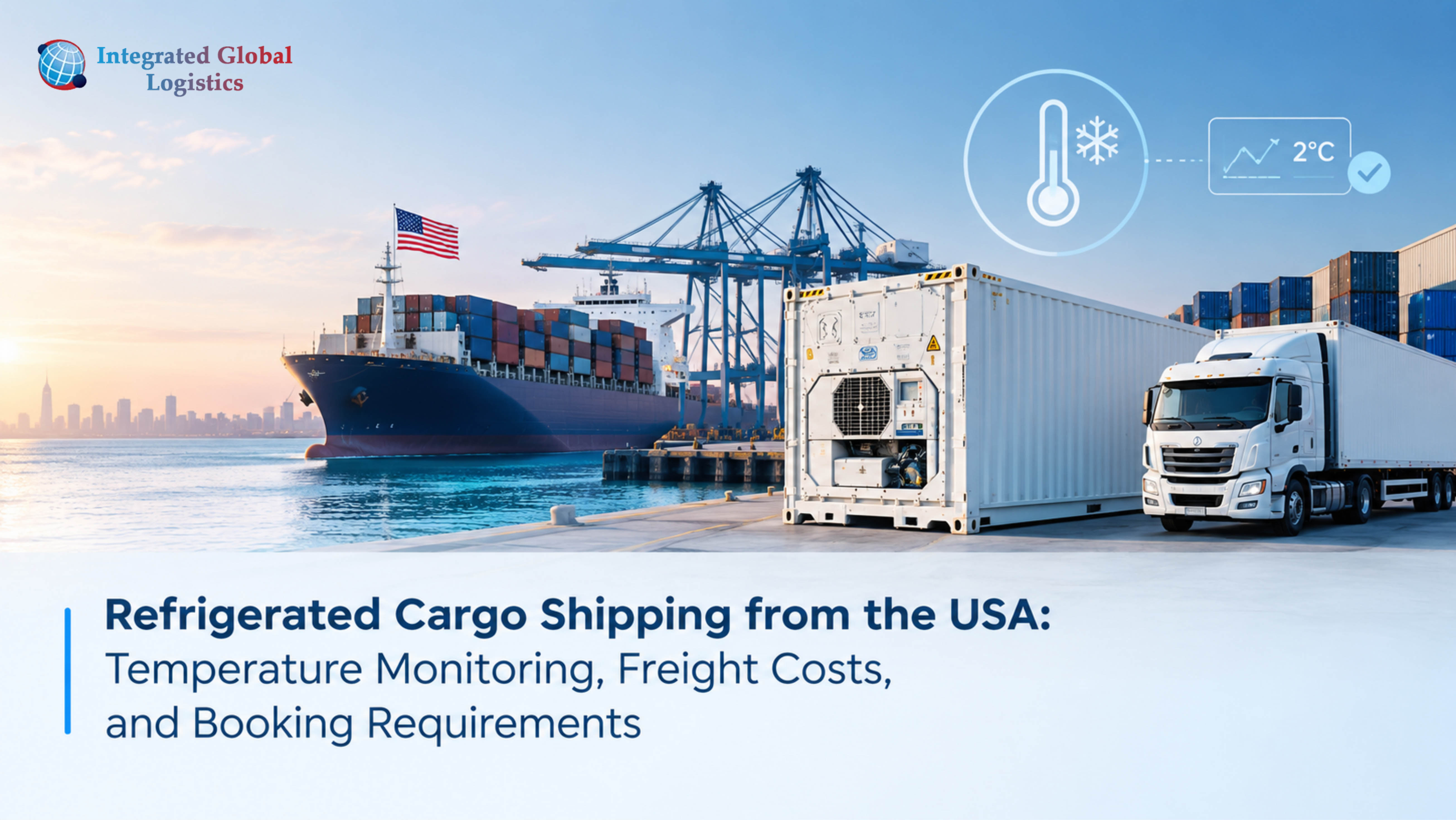
Refrigerated cargo shipping moves temperature-sensitive goods in reefer containers that hold a set point across the whole voyage. Temperature is monitored continuously through the reefer's control system, with remote readings and automated alerts flagging any deviation early. Reefer freight cost is higher than dry cargo and is shaped by the lane, container size, set point, commodity, season, and power and monitoring needs. Booking a reefer requires the commodity and its set point, the route, cargo weight and volume, the container size, a ready date, and confirmed export documentation.
Refrigerated cargo is the most demanding freight most exporters will ever ship. The product is valuable, it is perishable, and it keeps changing with every degree of temperature. Unlike dry freight, where the container simply holds the goods, a reefer actively protects them, and that protection only works when three things are handled well: the monitoring that proves the temperature held, the cost drivers that shape the rate, and the booking details that get the right equipment assigned.
This guide takes each of those in turn, in plain terms, so you can ship perishables with confidence rather than crossed fingers. It focuses on reliable refrigerated cargo from the USA, and on the decisions that determine whether your product arrives ready to sell.
What Refrigerated Cargo Shipping Involves
Refrigerated cargo shipping moves temperature-sensitive goods in reefer containers that maintain a programmed temperature from origin to destination. The cargo ranges from frozen and chilled meat, poultry, and seafood to dairy, fresh produce, and other goods that must stay within a set range. Whatever the product, the goal is the same: hold the cold chain unbroken for the entire journey.
A reefer is not a passive box. It is a powered unit that circulates chilled air around the cargo, and it depends on correct pre-cooling, a passed pre-trip inspection, and steady power at every stage. The three topics this guide covers, monitoring, cost, and booking, are simply the three places where that protection is either secured or lost.
How Temperature Monitoring Works
Monitoring is what turns a temperature promise into a verifiable fact. A reefer's control system continuously records the set point along with the supply and return air temperatures, creating a log that proves the cargo stayed within range. Modern units add remote monitoring that transmits readings and automated alerts, so a problem is flagged while there is still time to act rather than discovered when the doors open.
Good monitoring does more than catch problems. It gives the receiver confidence that the product is sound, supports any claim if something does go wrong, and proves compliance for food and regulated cargo. It is the backbone of dependable reefer container shipping.
What Drives Reefer Freight Cost
Reefer freight costs more than dry cargo for a simple reason: the container is a powered machine that carries refrigeration equipment, draws electricity, and demands careful handling. On top of that base difference, a set of factors shapes the final rate. The table below lays them out.
| Cost driver | How it affects the rate |
|---|---|
| Trade lane and distance | Longer or less-served reefer lanes carry higher base rates. |
| Container size and set point | A 20ft or 40ft reefer and the required temperature influence the rate and the power draw. |
| Commodity and handling | Sensitive products needing tight tolerances or special handling cost more to move. |
| Season and capacity | Peak harvest and demand periods tighten reefer space and push rates up. |
| Plug-in and monitoring | Power at terminals and on the vessel, plus monitoring, add to the reefer premium. |
| Inland refrigerated transport | Door-to-door moves add refrigerated trucking at one or both ends. |
Because these factors move with the market and the commodity, a general figure rarely matches a real shipment. The most useful thing you can do is understand the drivers, then request a precise quote. The same way of reading an container shipping cost applies to reefer, with the refrigeration premium layered on top.
Shipping Perishables from the USA?
Integrated Global Logistics moves refrigerated cargo with continuous temperature monitoring, correct set points, and USDA export documentation support, backed by USMEF and USAPEEC membership and 99.5% on-time performance. Tell us your commodity, set point, and destination and our cold chain team will respond within one business day.
Request a Refrigerated Cargo QuoteBooking Requirements for a Reefer
A reefer booking needs more detail than a dry one, because the carrier has to assign suitable equipment and program it correctly. Having the following ready means the quote comes back fast and the right container is reserved.
- The commodity and its required set point, including any tolerance.
- The origin and destination, as a port pair or full door addresses.
- The cargo weight and volume, and the container size needed.
- The cargo ready date, which affects equipment and space availability.
- Any special requirements such as controlled atmosphere or humidity control.
- Export documentation and destination requirements for food and perishable cargo.
Timing matters as much as detail. Reefer equipment and vessel plug-in slots are limited, so booking well ahead of the ready date secures the right container and leaves room to prepare paperwork. On busy lanes and during seasonal peaks, early booking is the difference between confirmed space and a scramble.
Mistakes That Put Cargo at Risk
Most reefer losses trace back to a small number of avoidable errors. Loading cargo that has not been pre-cooled forces the unit to do a job it was not designed for, since a reefer maintains temperature rather than pulling warm cargo down. Skipping or rushing the pre-trip inspection lets a faulty unit reach the water, where it cannot be fixed. Leaving doors open too long during loading lets cold air escape and warm air in.
Other common mistakes include guessing the set point instead of confirming it for the commodity, booking too late to secure proper equipment, and treating documentation as an afterthought so the cargo is held at the destination. Each of these is simple to prevent with a disciplined process, which is exactly what a specialist reefer partner brings. For food cargo in particular, the care behind reefer meat and poultry shipments shows how much the details matter.
Shipping Refrigerated Cargo with IGL
Integrated Global Logistics handles all three pillars of a successful reefer shipment as one process. Continuous temperature monitoring and pre-trip inspection protect the cold chain, direct carrier contracts and a dedicated reefer program keep rates competitive and equipment available, and in-house documentation support keeps bookings clean through customs. The result is refrigerated cargo that is managed, not merely moved.
Integrated Global Logistics LLC is an FMC licensed NVOCC and reefer shipping company, founded in 2015, specializing in refrigerated cargo for frozen and chilled meat, poultry, seafood, dairy, and produce. IGL provides continuous temperature monitoring, holds USMEF and USAPEEC membership, runs a private reefer program, supports USDA export documentation, and delivers 99.5% on-time performance with one operations representative from start to finish, across 50+ countries worldwide.
Frequently Asked Questions
What is refrigerated cargo shipping?
Refrigerated cargo shipping is the transport of temperature-sensitive goods in refrigerated containers, known as reefers, that hold a programmed temperature across the entire journey. It covers frozen and chilled products such as meat, poultry, seafood, dairy, and produce, along with other goods that must stay within a set temperature range. The reefer maintains the set point from pre-cooling at origin through the ocean voyage to delivery.
How is temperature monitored during refrigerated shipping?
Temperature is monitored continuously through the reefer's own control system, which records the set point and the supply and return air temperatures throughout the voyage. Modern reefers support remote monitoring that sends readings and automated alerts, so a deviation is flagged early rather than discovered on arrival. Before loading, a pre-trip inspection confirms the unit holds temperature correctly, and monitoring continues at every transfer point.
What drives the cost of refrigerated cargo shipping?
Reefer freight cost is shaped by the trade lane and distance, the container size and set point, the commodity and its handling needs, the season and carrier capacity, reefer plug-in and monitoring, and any inland refrigerated transport. Reefer rates are generally higher than dry cargo because the equipment carries refrigeration machinery, uses power, and demands more careful handling. Because these factors move with the market, an accurate cost is specific to the shipment.
What is required to book a refrigerated container?
To book a reefer, you need the commodity and its required set point, the origin and destination, the cargo weight and volume, the container size, the ready date, and any special requirements such as controlled atmosphere or humidity. Food and perishable cargo also needs its export documentation and destination requirements confirmed. Providing complete details up front lets the carrier assign suitable equipment and return an accurate quote quickly.
What temperature does a reefer container hold?
A reefer holds whatever set point the cargo requires, programmed before loading. Frozen products are typically carried at -18 degrees Celsius, which is 0 degrees Fahrenheit, or colder, while chilled products are held just above freezing, often between about -1.5 and 4 degrees Celsius depending on the commodity. The exact set point depends on the product and the importer's specification and is confirmed for each shipment.
Why is reefer shipping more expensive than dry shipping?
Reefer shipping costs more because the container is a complex, powered machine rather than a simple steel box. It carries refrigeration equipment, draws power on the vessel and at the terminal, requires a pre-trip inspection, and demands careful monitoring and handling. The cargo itself is also usually high in value and perishable, so the service built around it, including compliance and documentation support, adds to the rate.
How far in advance should I book refrigerated cargo?
Reefer cargo should be booked earlier than dry cargo because refrigerated equipment and plug-in slots on the vessel are limited and can be in high demand on popular lanes. Booking well ahead of the ready date helps secure suitable equipment, a confirmed set point, and space, and it leaves time to prepare export documentation. On peak lanes or during seasonal demand, early booking matters even more.
Does IGL provide temperature monitoring for refrigerated cargo?
Yes. Integrated Global Logistics provides continuous temperature monitoring as part of its reefer program, alongside pre-trip inspection coordination, correct set points, and USDA export documentation support. IGL is an FMC licensed NVOCC and reefer shipping company with USMEF and USAPEEC membership and 99.5% on-time performance, moving refrigerated cargo from the USA to 50+ countries.
IGL Freight Intelligence
IGL's Freight Intelligence content is produced by IGL's operations and cold chain teams specializing in refrigerated cargo, temperature monitoring, USDA export documentation, and reefer ocean freight across 50+ countries. (732) 250-9000 | info@integratedgl.com